
Heat Exchangers
Reboilers: A reboiler’s primary function is generating vapor. These devices force liquid through an exchanger to condense and enter a distillation column.
Condensers: Condensers remove heat from vapor for liquid conversion. These machines are often used with reboilers to release latent heat into the atmosphere.
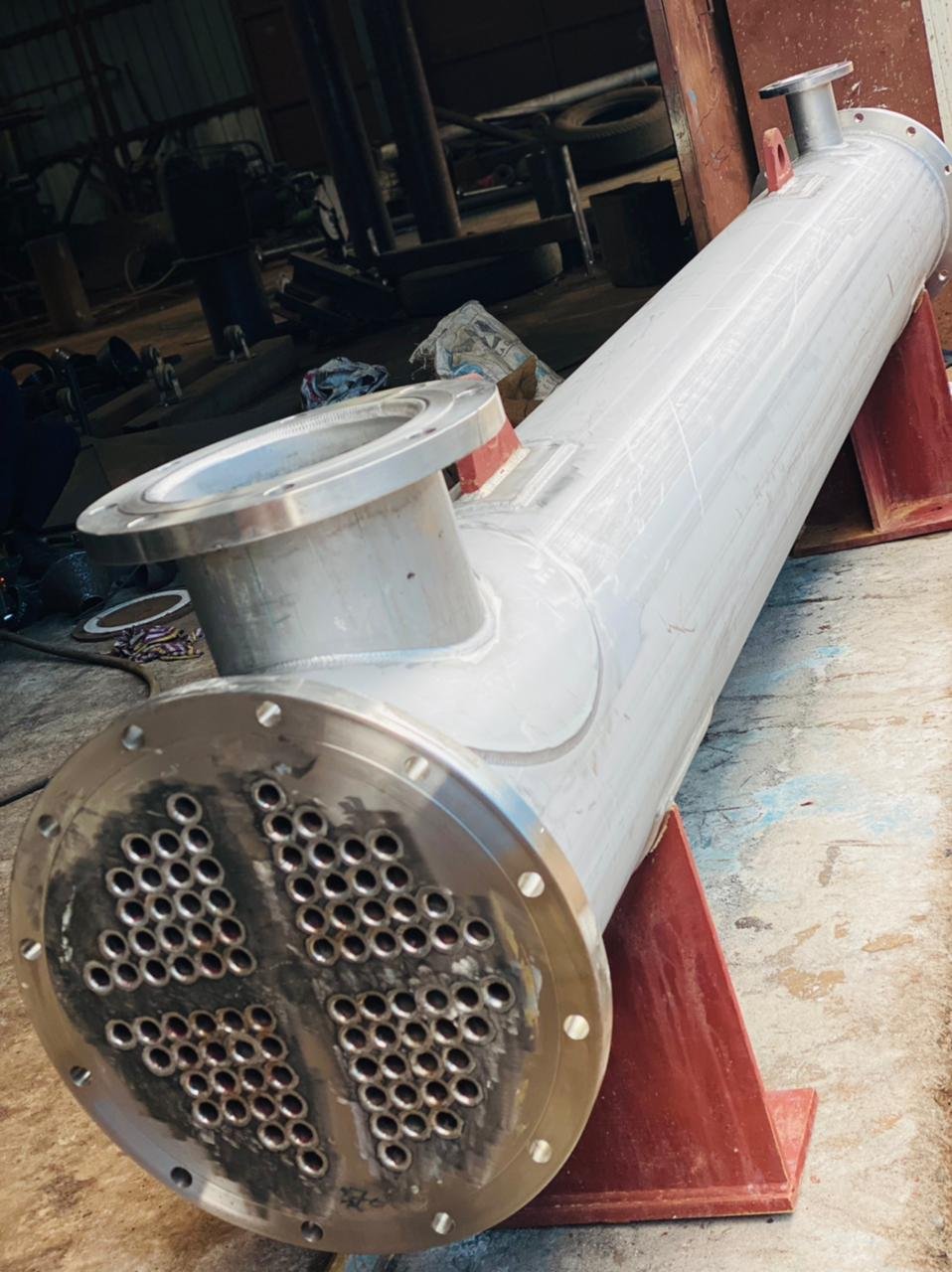
Shell and tube heat exchangers:
These devices transfer heat between a bundle
of
tubes surrounded by a large shell. Fluids in the tubes exchange heat with liquids
running
over the lines inside the shell.
...
Shell and tube heat exchangers will look something like this. With this design, we
normally find the Inlet and the outlet for one fluid at the very end of the heat
exchanger, known as the header. Then we have another Inlet and outlet for fluid two
on the main body, known as the shell. Inside the unit, we have the tubes. These bend
and loop around to start and finish at the tube plate, which sits between the shell
and the header.
The tubes will usually also pass through some baffles, which are sheets of metal. We
will see how these work in just a moment. The header, as well as the tubes, can be
removed for cleaning, repairs, and maintenance. Inside the header is a sheet of
metal known as the divider or the partition. This separates the tube ends, enabling
the fluid to flow into and then out of the heat exchanger tubes.
Fluid one will flow through the header into and around the tubes, then back to the
header. Fluid two will enter the shell and surround the outside of the tubes. The
baffles will partially block the flow, which will force the fluid to turn multiple
times. This creates a turbulent flow and ensures that fluid two mixes with itself,
which ensures maximum heat transfer. For example, we might find this in a
pharmaceutical factory with a boiler providing steam into the shell, which surrounds
the tubes. A chemical product is then pumped through the tubes and this absorbs the
heat of the steam through the tube wall.
So this product is going to exit the heat exchanger much warmer. Meanwhile, the
steam will start to condense into a liquid and flow back to the boiler to pick up
more heat and repeat the cycle. Additionally, these are used in refrigeration
applications like this industrial chiller. We have the water flowing through the
tubes, and the hot refrigerant in the shell. The water will absorb the heat of the
refrigerant so that it can transport this to the cooling tower, where it will be
ejected into the atmosphere